The recent move by the Central Bank Of Nigeria to unify the nation’s foreign exchange rates has affected the lives of thousands of Nigerian students studying in other countries, especially the United kingdom. Following this decision by the bank the Naira equivalent of their tuition fees increased by over 60 per cent.
About two weeks after President Bola Tinubu promised to unify the nation’s multiple exchange rates, the apex bank decided to float the Naira at the Investors and Exporters’ Window of the foreign exchange market. Since then, the Naira has fallen from N471/dollar to N750/dollar and N589.4/pound to N957.2/pound.
This has led to about 60 per cent increase in tuition fees for students in the UK.
An estimated number of 128,770 Nigerian students enrolled in universities in the United Kingdom between 2015 and 2022 according to data from the Higher Education Statistics Agency of the UK. This rise in exchange rate has put more pressure on many Nigerians that are schooling in the UK and beyond.
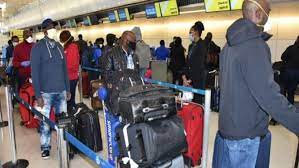
As UK Universities are currently on break many students fear that they might not be able to afford tuition on resumption
One Nigerian Student studying in Manchester, Adejoro Deborah, lamenting said “This policy is affecting those of us here and even intending students. My sibling has had to forfeit her admission because of this policy.
“Many students have fallen victim to online scammers just because they want to buy pounds, a friend of mine, for example, was a victim of third-party purchase as the banks at home are not dependable.”
Another Nigerian student studying in Leeds explained that the major challenge was that many kept their tuition fees in their Naira account at the former rate.
The student said, “Now they have to start looking for more money because the rate has gone up. If the official rate is not different from street rate, so what’s the essence of waiting for several weeks for your bank when you can just get it from third-party platform. It has only put more pressure on the students to look for more money.”
The student added, “If you put N5m in your account in March when the rate was around N560/£, that means it will pay around £9k tuition fee, but by July, the N5m will only be able to pay around £5k since the rate is now around 1k/£, so that’s where the real problem is. You need to start looking for an additional £4k. That’s the challenges many students are facing.”
Another intending UK-bound student, who only gave her name as Titi, stated that when she started her visa processing, PoF was pegged at N600/pound. According to her, she would have fallen victim to the new exchange rate if not that she applied less than a week before the change.
An international multimedia journalist and student based in the UK, Michael Orodare, noted that the suffering of many Nigerian students is an open secret.
He said while many people had tried to use Form A to pay their tuition fee balance, earlier, banks had delayed with excuses, including issues around tax clearance.
He said, “A lot of students are finding it difficult to pay their tuition. What many Nigerian students here are now trying to do is to use the Naira in their account to try and buy pounds which is now more than N1000. This is now more expensive and making fee payment very difficult for Nigerian students.”
Intending students are also affected by the new Naira policy
The increase in the cost of forex is also affecting many Nigerians intending to study in the UK.
For many of them, Proof of Funds is the most problematic part of their application process now.
According to an education consultant, Oyebode Omolewa, Proof of Funds is a student’s tuition balance plus living expenses. She stated that it is a crucial requirement for students planning to go to the UK as it proves to the UK government that a student has the capacity to take care of themselves while studying.
She noted that the rates are now dependent on when student submit their visa applications. She explained that when the official rate was around N560 – N600, students’ proof of funds was lower.
Omolewa said, “Proof of funds is the student’s tuition balance plus living expenses. For example, if a student’s tuition is about 15,000 pounds, and they pay 5,000 pounds to the university, their proof of funds will be the 10,000 pounds balance plus living expenses
“If the school is located outside of London, the cost of living is 9,207 pounds, if it is in London, it is 12,006 pounds. Let’s say we have a 10,000 pounds balance, if the school is outside London which is 9,207 pounds, when you add the two together, you will have 19,207 pounds multiplied by the exchange rate on the day you applied for a visa.
“If it was N1000 on the day it was 19,207 pounds multiplied by N1,000 before it used to be about N580 multiplied by 19,207 pounds.”
Omolewa further explained that PoF has been affected a lot, especially for students trying to go with their family members.
She noted that PoFs have almost doubled. She said, “PoF has almost doubled. This is likely to affect the number of people applying for study Visas now because if you were planning N15 million initially and now you need about N6 million extra if you don’t have it, you will just have to wait until you get it.”
Another student, who is planning to leave by August, said the PoFs had increased considerably with many intending students struggling to meet up.
He said, “When you calculate PoF now, the least you will get is about N1,100. It has really affected it, and it is not a good one. If you wanted to do a PoF of 19,000 pounds, before now you would need N16 million in your account. But now, you would have nothing less than N24 million for a 19,000 pounds PoF.”
Another intending UK-bound student, who only gave her name as Titi, stated that when she started her visa processing, PoF was pegged at N600/pound. According to her, she would have fallen victim to the new exchange rate if not that she applied less than a week before the change.
She noted that her PoF which was N9.8 million is now over N16 million. She told The PUNCH, “I am still good on my PoF, it was still less than N9.8 million. The Friday before the 12th of June, someone asked me to apply for my visa.
“Thank God for countries like the UK where your PoF will be determined based on the exchange rate of the day you apply. That was my saving grace. I applied on that Friday, and by the following week, exchange rate had gone up.
“My PoF was a little above N9.5 million. By the following week, it hit N16 million. I was going to be judged according to the exchange rate on the day of my application, but the thing is if I had applied a little later than I did, my PoF would have risen to over N16 million. I am just an average Nigerian, I don’t have one N6 million, N8 million somewhere. I would have needed about N17 million if I was late.”
According to her, she would have deferred her admission if she had applied after the exchange rate went up.
A Nigerian student in the UK, who didn’t want her name in print, explained that her brother is currently in the process of relocating to the UK through the study route.
She noted that her family is currently looking for an extra N7 million to N8 million because of the new exchange rate.
She said, “We are on the PoF matter for my brother, and we just have to get more money. He has not yet applied as we are just getting his CAS, this new exchange rate is biting.
According to the CBN, study-related foreign exchange outflow to the UK rose to $2.5bn in 2022. Nigerian students and their dependants in the United Kingdom contribute about £1.9bn annually to the UK economy, according to an analysis by SBM Intelligence