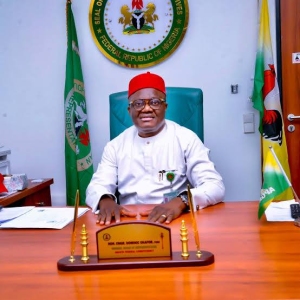
In a development that has left many Nigerians shaking their heads in disbelief, Dominic Okafor, a state lawmaker representing Aguata, has launched his latest “empowerment” initiative — the distribution of 200 branded wheelbarrows and cutlasses to his constituents.
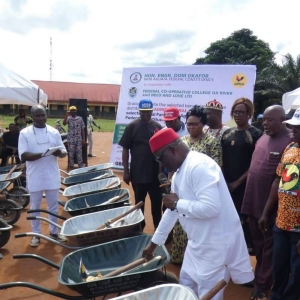
Each item, carefully decorated with his name and political party logo, was presented as part of a constituency project meant to “uplift the people.” According to Okafor, the tools would “empower hardworking farmers and youths to become self-reliant.”
However, the announcement was met with a flood of criticism. For many Nigerians, the project reflects the recurring pattern of tokenism in politics, where lawmakers substitute genuine development with symbolic handouts. “Other countries are talking about digital innovation, green energy, and healthcare. Our leaders are giving us cutlasses,” one social media user wrote.
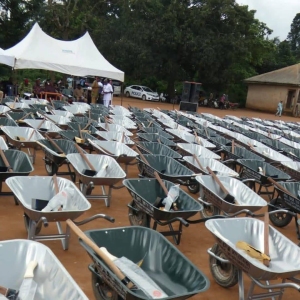
The branded wheelbarrows quickly went viral online, sparking ridicule and memes. Critics pointed out that constituency funds, which run into millions, could have been directed toward infrastructure, education, or sustainable job creation rather than wheelbarrows that serve as rolling billboards for politicians.
Supporters of the lawmaker, however, defended the move, claiming that the items would be useful for small traders, farmers, and local laborers who lack access to such basic tools.
Still, the controversy highlights a deeper question about governance in Nigeria: should lawmakers be applauded for distributing farming implements in the 21st century, or should citizens demand more visionary leadership and accountability in the use of public funds?
As one commentator quipped, “If we’re lucky, maybe next time they’ll give us torchlights and frying pans.”