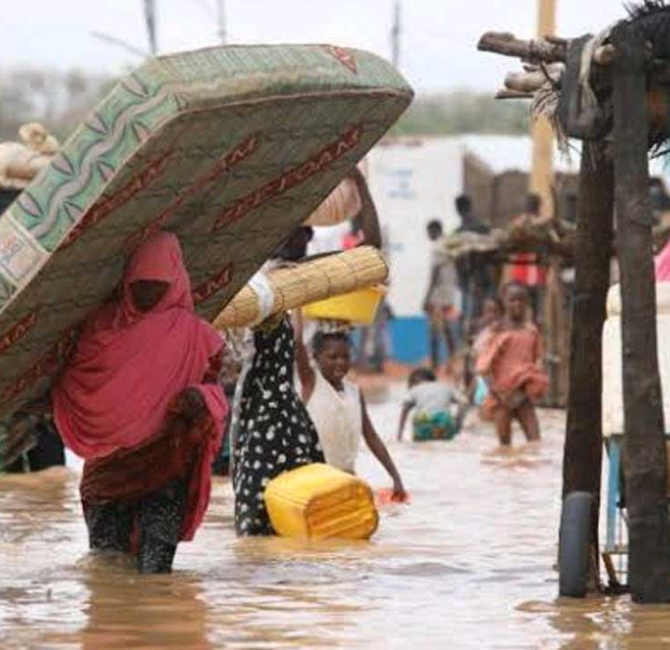
The National Emergency Management Agency has warned states along the path of River Benue in Nigeria to brace up for possible flood disasters in their various domains, following plans by the Cameroonian government to release huge volumes of water from the Lagdo Dam.
The Cameroonian government had in a letter addressed to the National Emergency Management Agency, alerted of its intention to release water from the Lagdo dam and asked the agency to take precautionary measures.
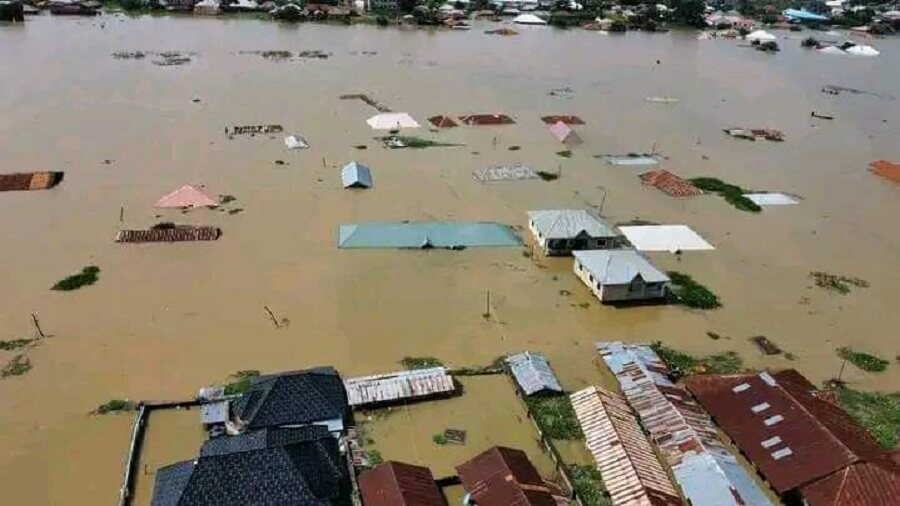
The letter, read in part, “I have the honour to inform that the ministry is in receipt of a Note Verbale from the High Commission of the Republic of Cameroon informing that Cameroonian officials have resolved to open the flood gates of the Lagdo Dam on the Benue River in days ahead due to the heavy rainfall around the dam catchment area in Northern Cameroon.”
The letter stated that it was pertinent to note that when the release of water became necessary, the authorities of the Lagdo Dam would be releasing only a modulated variable small amount of water at a time in order to mitigate and avoid damage that the released water might cause along the River Benue basin in both Cameroon and in Nigeria.
“In view of the above, it would be appreciated if the esteemed agency takes all the necessary proactive steps and actions that will mitigate the damage as well as sensitise the populace living in such areas to vigilance and all necessary precautions.
According to the National Emergency Management Agency officials, no fewer than 11 states including Adamawa, Taraba, Benue, Nasarawa, Kogi, Anambra, Edo, Delta, Bayelsa, Rivers and Cross River are likely to feel the negative impacts of the opening of the dam.
Lagdo Dam, located 50 kilometers south of the city of Garoua on the Benue River, often releases huge volumes of water when overflowing and this leads to flooding in various states downstream of Nigeria.
Based on this development, some states to be affected by the opening of the dam confirmed on Sunday that they would demolish structures on waterways, while others earmarked some schools to serve as camps for internally displaced persons.
Officials of the National Emergency Management Agency and the Nigeria Hydrological Services Agency said 11 states were along the path of River Benue and are going to be affected by the opening of Lagdo Dam.
Although they noted that there was no cause for alarm, they named the states to include Adamawa, Taraba, Benue, Nasarawa, Kogi, Anambra, Edo, Delta, Bayelsa, Rivers and Cross River.
The Head of Media and Public Relations, NEMA, Ezikiel Manzo, said the agency had informed the state governors, adding that the states had been advised on what to do to mitigate the impact of possible floods.
“We have introduced this into all our awareness programmes and in addition to that, NEMA has written to all the governors to alert them. We have also mentioned the things that they need to do in order to mitigate the impact of the flood.
“So what this means is that with this information concerning the excess water being released from the dam, it means that all the state governments along the River Benue axis, the time has come for them to match action with the information that has been given to them in anticipation of this flood.
“And some of the things they need to do is for them to immediately monitor the people and communities along the flood pathway and begin to move them away from danger.
“They (Lagdo Dam) are just beginning the release of the water, we don’t know, but if the rain increases and the release of the water continues, it means the people will need to move quickly out of the floodplain.”
Manzo, however, stated that ‘if after this initial release we do not have much rain again, then it means they are going to stop. I’m saying this because we don’t want to send people panicking that the release means that they should run away completely from the river bank.
“But what we are saying is that the time has come for the people to be conscious of the risk that is lying beside them in terms of the likelihood that the river will overflow its bank.”
Asked to name the states that are likely to be affected, the NEMA official said, “They include Adamawa, Taraba, Benue, Nasarawa, Kogi. Then from Kogi, we have states like Anambra, Edo, Delta, and Bayelsa.”
‘Dam opened August 14’
The Director-General of the Nigeria Hydrological Services Agency, Clement Nze, also confirmed the letter but noted that the dam had been releasing water before the letter was sent to Nigeria by Cameroon.
“Yes, that letter was signed on August 21, 2023, by the African Affairs officer at the foreign affairs ministry here in Nigeria. The Adamawa State Government issued a press release recently, which my permanent secretary drew my attention to last week, on Tuesday precisely.
“I got in contact with the manager of the dam last Wednesday and he confirmed that they opened the dam on August 14, 2023, at 10.10 am. He said they had been spilling water at the rate of 200 cubic metres per second, which is about 20 million cubic meters per day.
“So the letter to the foreign affairs ministry is just to officially state it, but they have been releasing water before issuing that letter. They also confirmed to me on Friday that because of the huge volume they have released downstream, they decided to reduce it to 50 cubic meters per second, which is about five million cubic meters per day.”
Meanwhile, Nze explained that the flow of the water from the dam had nothing to do with Niger, Kwara and Kebbi states, “but after reaching River Niger, it will start moving down to Edo, Delta, Anambra and then to Rivers, Bayelsa, before it enters the Atlantic Ocean.”
He noted that the flow could get to part of Cross River, but stated that there was no cause for alarm currently, though it was vital for the governors of the identified states to make all the necessary preparations.
Commenting on the development, the acting Executive Secretary of the Benue State Emergency Management Agency, James Iorpuu, said some of the activities of residents on the river banks and along the water channels, which could contribute to blocking the drains, were being removed.
In Nasarawa, the state government announced its decision to demolish all structures built on waterways across the 13 local government Areas of the state in a bid to tackle issues relating to flooding.
In Taraba, the state government said it had alerted six local government areas and issued warnings to residents living in flood-prone areas to relocate to safer areas.
Also reacting to the development, the Public Relations Officer of the State Emergency Management Authority in Anambra, Chinyere Nwoye, said Anambra State had been alerted of the impending flood.
“The state government and its international partners have carried out early warning sensitisation to all the Local Government Areas which experience flooding. And holding centres are getting ready now.
On their part, the Niger State Emergency Management Agency said it was aware of the plans by Cameroon to open its Lagbo Dam and had prepared its communities in case of any eventuality.