
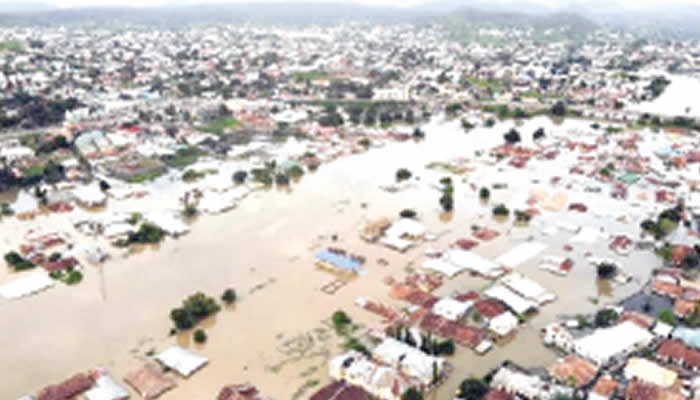
Heavy seasonal rains are a regular feature of life in Nigeria and towns close to the country’s main rivers are particularly vulnerable.
The Nigerian Meteorological Agency (NiMET) and the National Emergency Management Agency (NEMA) has on february this year warned the the Federal Government of the impending doom that awaits its citizens if the two dams, Kainji and Jebba were opened.
This year floods have killed over 600 people with many thousands displaced.
Regular flooding Data in Nigeria.
In 2017, floods affected 250,000 people in the eastern-central region
In 2016, 92,000 were displaced and 38 died
In 2015, more than 100,000 were displaced with 53 deaths
In 2012, devastating flooding forced two million Nigerians from their homes and 363 died, according to authorities.
In 2012, hundreds of thousands of acres of land were flooded in Nigeria when the River Benue and Niger over-spilled. The Niger River reached a record-high level of 12.84m (42ft).
In 2015, A release quoting the Director General, Muhammad Sani-Sidi, informed that “the Cameroonian authorities in Garuoa have indicated that before November 2015 there would be routine release of water from the Lagdo dam due to excessive amount of water presently contained in the dam”. In 2015, the breakdown of dams caused floods in 11 states across Nigeria in August and September.
According to the National Orientation Agency, NOA, 53 people died, 100,420 people were displaced and a lot of buildings and houses were swept away.
In 2016, the Nigerian Meteorological Agency (NiMet), in collaboration with the Nigerian Hydrological Services Agency (NIHSA) on August 08 warned of potential flooding in 11 states across the country between August and October this year.
NiMet said that heavy rainfall throughout June and July means that soil moisture has either reached saturation, or near saturation levels in some parts of the country, including: Akwa Ibom, Bauchi, Benue, Borno, Cross River, Delta, Kaduna, Kwara, Nasarawa, Yobe and Zamfara.
NiMet said that the already saturated ground means that “floods should be expected in these areas because the soil is no longer able to absorb more rainwater in the coming weeks which coincide with the peak rainy season.”
NiMet advised governments, communities and individuals in these vulnerable parts of the country to take proactive actions such as clearing water channels and drainages and avoiding activities that block the free flow of flood waters. In 2016, 92,000 were displaced and 38 died.
In 2017, On 4th September, heavy rains led to flash floods discharges and river overflowing in Benue State, centre-east Nigeria. Almost 250,000 people were reportedly affected in 21 Local Government Areas. Hundreds of houses were destroyed and crop fields damaged. In 2017, floods affected 250,000 people in the eastern-central region
Another devastating flood occurrence is the year 2022. Nigerians living in states and communities along the River Benue were heavily warned by the National Emergency Management Agency, NEMA, of the danger of the heavy flooding .
The Nigeria’s meteorological agency has warned that the flooding could continue until the end of November in some states in the south of the country, including Anambra, Delta, Rivers, Cross River and Bayelsa.

